
The Political Spin on Violence: Misinterpretations in Media Narrative
- LeRoy Cossette

- Sep 26, 2025
- 4 min read

With the recent assassination of Charlie Kirk, the media landscape has become a battleground, unfortunately, for a wave of misinformation. Late-night hosts, such as Jimmy Kimmel, who is back on air after mischaracterizing Kirk’s assassin as a MAGA follower, have shifted from comedy to addressing the profound implications of political violence. Kirk's death has exposed a troubling trend: how fake news outlets, left-wing political figures, and radical socialist entertainment personalities manipulate facts to serve their political agendas and ideologies.

The assassination of Charlie Kirk, a well-known Christian conservative young adult influencer, shook the political landscape. Tyler Robinson, the individual charged with Kirk's murder, is a white male who was raised in a conservative Mormon home, which naturally led to socialist Democrats' assumption that he was a white supremacist, increasing discussions about his political views.

Some commentators quickly jumped to label Robinson's actions as part of a broader trend of right-wing violence. Wajahat Ali, a former New York Times contributor, tweeted about the incident, pointing out that a white shooter killed a white man. While this statement is factually accurate, it has been used to argue that the left bears no responsibility for this or any other political violence.
The truth is, people involved in violent acts often have political ties, and these ties are primarily with the radical left. However, left-wing news outlets and social media portray these murderers in a simplified way to support their radical socialist agendas.
The Media's Role in Shaping Narratives
The media significantly influences public perception, particularly following violent incidents. In Kirk's case, the story quickly shifted to highlight the assassin's race and background, along with the implications of these factors.
A recent YouGov poll showed that only 10% of Democrats correctly identify the shooter as having left-wing views. These low numbers raise concerns about the effectiveness of media messaging in communicating accurate information. If a party that regularly criticizes misinformation struggles to recognize the political beliefs of a high-profile attacker, what does this say about the media's overall effectiveness?
The mainstream media often adopts a left-wing political stance. For instance, after Kimmel's brief suspension, reports emerged of an anti-Trump individual arrested for shooting at an ABC affiliate in Sacramento. Meanwhile, another left-wing shooter targeted an ICE facility in Dallas, leaving shell casings inscribed with the phrase "ANTI-ICE."
Although these incidents are serious, the media’s coverage often highlights the importance of avoiding rushed conclusions. Experts on networks like MSNBC and CNN have noted that the motivations behind these actions may remain unclear, promoting a narrative that favors ambiguity over accountability.
The Blame Game: A Political Tool
In the aftermath of violent incidents, the media often engages in what can be called a "blame game." This pattern involves various anti-American groups pointing fingers and attempting to blame pro-Christian, pro-American conservatives.

pointed out the lack of clear information about the shooter’s motives, noting that early clues like shell casings were not enough to provide definitive answers. This hesitation to assign blame can be seen as a double-edged sword. While it promotes a more cautious approach to reporting, it also results in a lack of accountability for those whose actions help create a culture of violence.
The phrase "not much more to go on" highlights a broader issue in the media: the challenge of striking a balance between sensationalism and responsible reporting. Headlines often shape public opinion, and the details of individual motives get lost in the shuffle.
The Impact of Misinformation

serves as a powerful tool in politics, with wide-reaching effects. The stories about Kirk's assassination and how the media covered it highlight the dangers of oversimplifying complex issues.
When leading figures and media outlets promote narratives that serve their agendas and ideologies, they create a distorted view of reality. Such distortions deepen polarization and increase misunderstandings among political groups.
Tyler Robinson’s case reminds us that people are difficult to categorize politically. Human behavior and motivations are complicated, and they can’t be simplified into stories that fit specific political views or ideologies.
Understanding the Narrative Landscape
As we navigate the complex landscape of political violence and media coverage, it is crucial to maintain a critical perspective. The assassination of Charlie Kirk and the related discussions highlight the dangers of misinformation and how easily narratives can be distorted.
In an environment where the media greatly influences public perception, news consumers must seek accurate information and critically analyze the narratives they encounter. The way violence is politicized is not just a matter of opinion; it has real-world consequences that impact lives and communities.
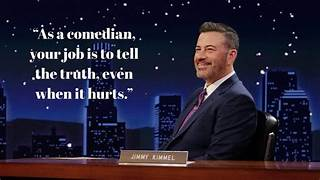
As Kimmel reenters the spotlight, the focus shouldn't just be on entertainment but also on the responsibility that comes with addressing serious issues. The stories we highlight can influence our future political conversations. It’s up to all of us to foster a culture of understanding rather than division.
Ultimately, even if the truth is more complicated than it seems, it is a pursuit worth pursuing.

Visit americaninsanity.org to learn how to become "The Informed Citizen" and gain valuable insights into the issues facing our communities.


Comments