
Protecting Life from Conception; Founding Fathers; & The Value of Human Dignity


Founding Fathers; Life From Conception; Human Dignity: Connected?
Human life is fragile long before it is visible to the eye. A heartbeat, a breath, a newborn cry, an aging hand. Each reminds us that life is not something people create at will or own without limits. It is received, carried, protected, and one day surrendered.
Few questions test a society more deeply than this one: Who counts as worthy of protection? The answer shapes law, medicine, family life, and public conscience. It also shapes how people speak about abortion, care for the vulnerable, support parents, and honor those near the end of life.
Why do people believe life begins at conception? Did our Founding Fathers believe that human life was sacred, and how did their beliefs and principles impact the creation of the U.S. Constitution?
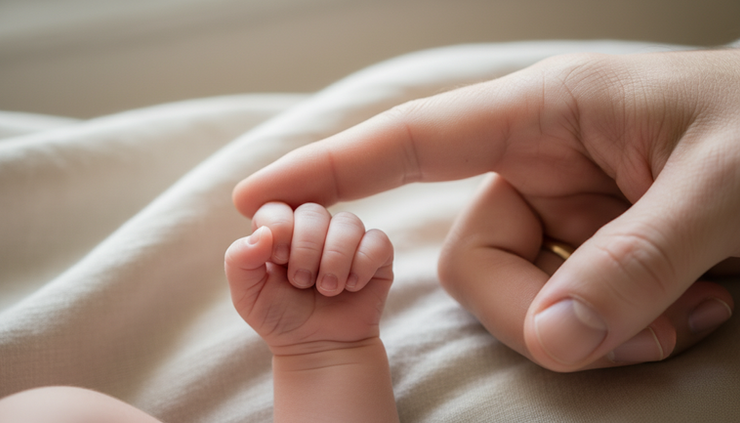
The belief that life begins at conception rests on a simple idea: from fertilization, a new human organism exists with its own genetic identity and an internal direction of growth. It is not yet mature. It is not independent. But it is living and human.
This is why Christian conservatives draw a moral line at conception. We see the unborn child not as potential life in the loose sense, but as life with potential, a member of the human family at an early stage.
That view does not erase the complexity of pregnancy. Real situations may involve fear, poverty, medical crisis, trauma, family pressure, or abandonment. Any serious discussion of abortion must face those realities with compassion. But compassion must not require society to deny the humanity of the unborn. It must lead to better care for both mother and child.
A culture that protects life from conception must ask practical questions:
How can families receive support before and after birth?
How can communities reduce isolation during crisis pregnancies?
How can fathers, relatives, faith groups, and civic institutions carry real responsibility?
How can medical care respect both patients when two lives are involved?
The question is not only what the law permits. It is what love and justice require.
The Founding Fathers did not debate abortion in the same medical, legal, or political terms used today. Modern technology, prenatal imaging, neonatal care, and current abortion law did not exist in their world.
Yet their political philosophy placed life at the center of human rights.
The Declaration of Independence names “Life, Liberty and the pursuit of Happiness” as unalienable rights. That order matters. Liberty and happiness cannot exist for a person whose life has already been taken. The right to life stands as the first condition of every other right.
The founders drew from natural law, English common law, biblical thought, Enlightenment philosophy, and classical republican ideas. They often disagreed with one another, and their own society failed grievously to honor its stated ideals, especially through slavery. Still, the principle they wrote into the nation’s birth certificate remains powerful: rights do not come from government. Government exists to secure rights that are already rooted in human nature and dignity.

In the eighteenth century, Americans commonly lived close to death. Infant mortality, childbirth risks, disease, war, and limited medicine made life feel uncertain. That nearness to mortality shaped moral seriousness. Life was not casual. It was precious because it could be lost so quickly.
For the Founding Fathers and citizens of the era, the sanctity of life had religious roots. Human beings bore the image of God, so no person could be treated as disposable property or mere convenience. For others, the argument took a philosophical form: human beings possess a nature that deserves respect, regardless of strength, usefulness, or social status.
Those beliefs were imperfectly applied. The contradiction of slavery shows how a society can affirm human dignity in words while denying it in practice. That failure should humble modern readers. It should also warn us.
A society can grow comfortable excluding some human beings from protection when their dependence becomes inconvenient, or their voice cannot be heard.
That pattern did not end in the past. It remains a temptation in every age.
Modern abortion debates often turn on autonomy, privacy, hardship, and bodily integrity. These are serious concerns. Pregnancy asks much of the person carrying the child, physically, emotionally, and socially.
The founding vision adds another question: Does the unborn human being have a claim on justice?
If rights belong only to those who are wanted, visible, viable, or able to speak, then rights become conditional. They depend on recognition by others. But the American promise, at its best, says human worth comes before social approval.
That does not settle every policy question. People of good faith may debate the best laws, exceptions, penalties, medical standards, and support systems. Still, if life begins at conception, the state and the community cannot treat abortion as only a private choice. It becomes a matter of protecting vulnerable human life.
The phrase Protecting Life from Conception, Founding Fathers, and the Value of Human Dignity points to this connection. The Founding Fathers’ strongest ideals push modern society to widen, not narrow, the circle of protection.

To defend unborn life with integrity, society must also care about life after birth. A pro-life ethic cannot stop at delivery. It must include children in poverty, mothers without support, people with disabilities, the elderly, the sick, and those nearing death.
A consistent ethic asks communities to protect life at every stage:
Before birth, through prenatal care and support for parents
In childhood, through safety, food, education, and stable homes
In disability, through inclusion rather than neglect
In illness, through care that honors dignity
Near death, through presence, comfort, and protection from abandonment
This does not mean every issue is morally identical. It means human dignity should not appear only when politically useful. The same principle that protects the unborn should also protect every vulnerable neighbor.
Every human life begins in dependence. No one enters the world strong, self-sufficient, or able to demand rights. Each person survives because someone else makes room, gives care, and accepts responsibility.
That fact should soften the way society speaks. Abortion is not an abstract argument for many people. It touches grief, shame, hope, fear, conviction, and loss. A culture of life should tell the truth, but it should not speak with cruelty. It should defend the unborn while offering mercy to those who have chosen abortion and help to those who feel trapped.

The value of human life is tested where life is weakest. At conception. In crisis. In disability. In old age. In sickness. At the edges where dependence is greatest, society reveals what it truly believes about dignity.
The Founding Fathers left a principle larger than their own failures and larger than any single political moment: life is not a gift from the state. It is a basic human good that law must respect and communities must guard.
The task now is to make that belief real. Not only in courtrooms and legislatures, but in homes, clinics, churches, neighborhoods, and conversations. To protect life from conception is to say that no human being is too small, too hidden, too weak, or too dependent to matter.


The "Informed Citizen" is a Judeo-Christian conservative blog and website dedicated to providing information on our Constitution and the country's governance, enabling you, the voter, to make informed decisions at the ballot box. Neither it nor I, the editor and owner of this blog, am in any way affiliated with or speak on behalf of any political party or individual. What is posted are researched facts or when appropriate identified as being "My Opinion."
If you are interested in participating in Zoom classes to learn about our Constitution, what the Constitution actually states, the meaning behind the Articles, the history behind its creation, along with informational conversations, please visit americaninsanity.org and subscribe to “The Informed Citizen.”
Together, our voices as Judeo-Christian conservatives will resonate more powerfully than ever.
Please share this post with your contacts. Everyone needs to be an informed citizen, so they, too, can better understand our Constitution, what our elected officials are doing to either support or abuse our Constitution, and thereby make informed decisions at the ballot box.

Comments