
Unforgettable Story of Seventy-seven WWII Women Heroes


Women Are Heroes Too - Seventy-seven WWII Angels
Seventy-seven women saved thousands of lives while under enemy fire, survived three hard years as prisoners of war, and returned home to a country that nearly forgot them.
They were known as the Angels of Bataan: 66 Army nurses and 11 Navy nurses who found themselves on the front lines when Japan attacked the Philippines in December 1941. Military rules said women shouldn’t be in combat, but war forced them into it anyway.

When Manila fell, these brave women were evacuated to the Bataan Peninsula. With no walls, no shelter, and only determination, they set up field hospitals in the stifling jungle.
Japanese bombers flew overhead daily. Artillery shells screamed through the trees. And still, the wounded kept coming.

They worked relentless 20-hour shifts in suffocating heat, treating combat wounds, malaria, and dysentery. When supplies vanished, they boiled bandages to sterilize them and rationed morphine until it was gone.
One nurse later said: “We stopped thinking about comfort, about fear, about ourselves. There was always another soldier who needed us more than we needed sleep.”

When Bataan fell, they moved their hospital to the fortified island of Corregidor. They worked deep underground in the Malinta Tunnel, using flashlights while bombs exploded above.
On May 6, 1942, Corregidor fell. The 77 nurses were taken prisoner—the largest group of American military women ever captured by an enemy.

For nearly three years, they endured the brutal conditions of Santo Tomas and Los Baños internment camps. They were given starvation rations—as little as 700 calories a day. Diseases like beriberi and dysentery ravaged the population.

The nurses lost an average of 30% of their body weight. But they never stopped being nurses.

Under the leadership of Captain Maude Davison and Lieutenant Josie Nesbit, they maintained a medical unit. They treated fellow POWs for the ravages of starvation with virtually no equipment or medicine.

They made crutches out of bamboo. They traded precious food rations for clean water to fight dehydration. They reminded every prisoner that survival itself was an act of resistance.

One nurse, Lieutenant Juanita Redmond, wrote:
“We were so hungry we dreamed about food constantly. But we never dreamed about leaving our patients.”

In February 1945, American forces liberated the camps. All 77 nurses came home alive—a miraculous outcome.
They returned to a nation grateful for victory but largely uninterested in the specific stories of women's wartime service. Male soldiers received ticker-tape parades and front-page coverage.
The nurses received quiet commendations and were expected to return to a 'woman's place' without complaint.

They were celebrated as icons of sacrifice, but rarely recognized as military professionals whose service transcended the era's gender roles.
Post-traumatic stress wasn't a recognized condition then, especially not for women; you were simply expected to move on. For decades, they were just footnotes in history and rarely spoke about what they went through. Their courage was forgotten.

It wasn’t until the 1980s and 90s that historians finally began to document the full scope of their service. The last surviving Angel, Lourdes “Lulu” Arizala, passed away in 2015.
The story of the Angels of Bataan reminds us that courage doesn’t require a weapon. Heroism can look like continuing to care for others when you’re barely surviving yourself.
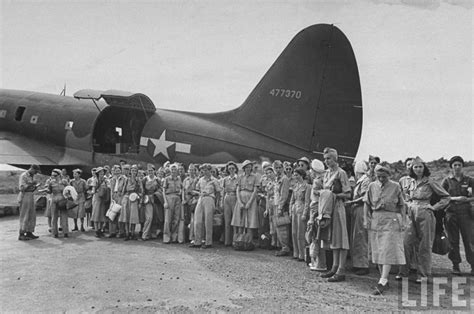
These 77 women never stopped helping others, even in the worst conditions. They deserve to be remembered with the same respect as any World War II hero.
Their sacrifice reminds us that history is incomplete until all its heroes are counted. The true measure of a nation is not just the battles it wins, but the determination with which it remembers the selfless souls it almost forgot.
Honor the forgotten, or we risk forgetting what truly matters.

>We Are Human Angels<
The book "We are Human Angels," with its unique story, is the book phenomenon of the web. It is a self-published book, and is only available online. Because of this, "We are Human Angels," has not been given the usual promotion and marketing efforts that publishing houses typically carry out with their newest releases.
Nevertheless, within a very short time after its publication, many readers from different nationalities, driven by a deep desire to share its message, spontaneously began contacting the authors, offering to translate the book into their native languages.
"We are Human Angels," can now count on many different translations (and other translations are yet to come) and has become the benchmark for the steadily increasing community of Human Angels in the world., Are you a human angel?
Awakening the Human Spirit!

Comments