
The Gun Wad Bible: A Strange and Sad Revolutionary War Story


The Gun Wad Bible: A Revolutionary War Story On How Desperate Men Used Their Bible
A Bible is the kind of object people usually try to save from fire, rain, and ruin. In the Revolutionary War, some pages from Bibles and other books were sometimes torn out, rolled up, and used to help fire muskets.
That small fact is hard to forget.
The story known as The Gun Wad Bible sits in that uneasy place between battlefield necessity and personal loss. It is not a grand tale about a famous general or a turning point in a campaign. It is smaller than that. A book meant for reading, prayer, memory, and comfort became part of the machinery of war.
That is what makes it so strange. That is also what makes it sad.
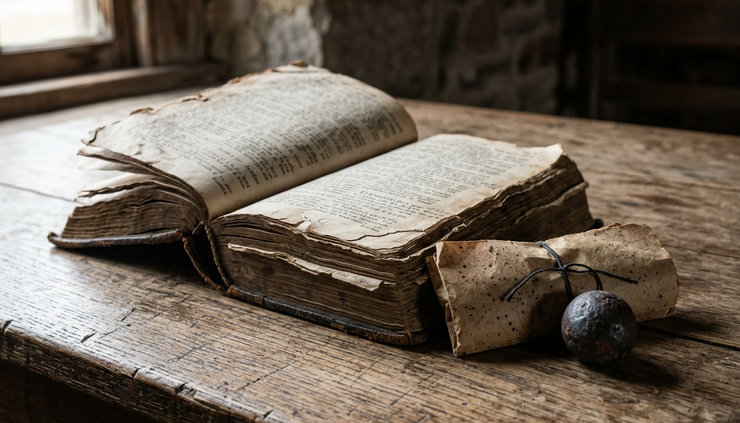
To understand the Gun Wad Bible story, it helps to know how an ordinary musket worked.
Most Revolutionary War soldiers carried smoothbore muskets. These weapons did not use modern metal cartridges. A soldier often carried small paper cartridges instead. Each cartridge usually held gunpowder and a lead ball, wrapped in paper.
Loading a musket took a practiced sequence:
Bite open the paper cartridge.
Pour some powder into the pan.
Pour the rest down the barrel.
Drop the ball into the barrel.
Use paper as packing or wadding.
Ram everything down with the ramrod.
Shoulder the weapon and fire.
The paper mattered. It helped package the charge before battle, and it could help hold the ball and powder in place inside the barrel. Without proper paper, a soldier had a problem.
Armies needed a steady supply of cartridge paper. During the Revolutionary War, supply was often uneven. Soldiers ran short of shoes, blankets, food, powder, flints, tents, and almost anything else an army might need. Paper was no exception.
When soldiers lacked cartridge paper, they used what they could find. Letters, newspapers, sermons, pamphlets, book pages, and blank leaves could all become makeshift cartridges or wadding.
That is where the Bible enters the story.
A Bible printed on thin, flexible paper could be useful in a desperate moment. The pages were light. They could be folded, rolled, torn, and packed. Those same qualities made them practical for a musket, even though their meaning made their use feel painful.
This is the kind of detail that cuts through the clean paintings and patriotic speeches. A battle was not only flags, drums, and shouted commands. It was also smoke, fear, hurry, shortage, and damage done to ordinary things.
At first, using pages of Scripture as gun wadding sounds like an act of disrespect. In some cases, it might have been. Soldiers, like all people, varied in their beliefs and behavior. War often lowers the guardrails around what people do.
Yet the more human explanation is often simpler: soldiers were desperate.
A soldier did not have endless supplies. If the fight had started, and paper was needed now, the question was not about reverence in the abstract. It was about loading fast enough to live through the next few minutes.
Books also traveled with people. A Bible might be in a home, a chapel, a meetinghouse, a school, a camp, or a soldier’s own pack. It could be one of the nearest sources of usable paper.
That makes the act more tragic, not less. The Bible was not just a religious text. For many families in the 1700s, it was also a record book. People wrote births, deaths, marriages, names, and dates inside. A family Bible could hold a private history across generations.
To tear pages from such a book was not like using scrap paper. It could mean damaging a household’s memory.
Some accounts of “gun wad” Bibles are tied to particular artifacts, often described as old Bibles with missing pages, torn edges, or family histories interrupted by war. Like many small stories from the Revolution, the details can vary depending on the telling. Exact names, locations, and chains of ownership are sometimes hard to prove without careful records.
Still, the broader practice makes sense in the material world of the time. Soldiers needed paper. Armies struggled to supply it. Books were made of usable paper. War is very good at turning meaningful objects into tools.
That is the heart of the story.
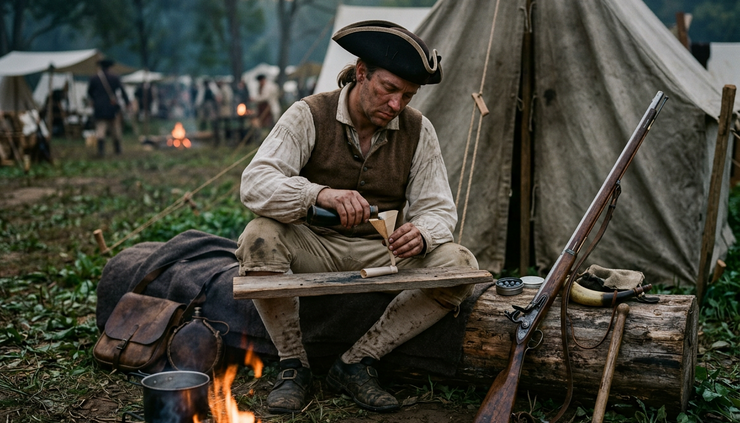
The phrase “Gun Wad Bible” sounds almost impossible at first. It puts two worlds together that do not seem to belong in the same sentence.
One world is quiet. It has reading, prayer, family names, and worn covers softened by hands.
The other world is loud. It has powder smoke, shouted orders, injury, and the sharp rhythm of loading and firing.
That clash is why the story stays with people. It shows how war collapses categories. Nothing stays safely in its place. A church can become a hospital. A barn can become a fort. A family home can become a headquarters. A Bible can become cartridge paper.
The Revolutionary War is often remembered through large words: independence, liberty, loyalty, treason, republic. Those words matter. Yet they can make the war feel cleaner than it was.
The war was also a long strain on daily life. Civilians housed soldiers. Farms were raided. Families were divided between Patriot and Loyalist politics. Enslaved people weighed dangerous choices in a conflict that spoke of liberty while denying it to many. Indigenous nations faced pressure from every side. Soldiers suffered disease more often than battlefield wounds.
Small artifacts remind us of that larger pain because they are so physical. A torn book page can do what a monument sometimes cannot. It makes the past feel handled, damaged, and close.
The Gun Wad Bible story also raises a hard question: what do people sacrifice when survival becomes the only concern?
Sometimes the answer is lofty. People sacrifice comfort, safety, money, or reputation. Sometimes the answer is painfully ordinary. They sacrifice a page, a blanket, a fence rail, a pew, a door, a family keepsake.
That is one reason Revolutionary War history is richer when it includes small objects. They keep the war from becoming too neat.
Every generation retells the Revolution in its own way. Some tell it as a story of noble ideals. Some focus on military strategy. Some focus on the experiences of women, Black Americans, Indigenous peoples, Loyalists, or common soldiers.
Stories like this one do something different. They do not replace the larger history. They interrupt it.
They say: look closer.
A musket shot required more than a weapon. It required powder, lead, flint, paper, training, nerves, and often luck. That paper had to come from somewhere. If it came from a Bible, then the history of that shot includes printing, religion, family life, scarcity, and loss.
That is a lot of history packed into a torn page.
There is also a warning here about how we treat old stories. Not every version of a dramatic artifact tale can be checked with certainty. Family stories can grow. Museum labels can get simplified over time. Local legends can attach themselves to real objects. A careful reading does not have to drain the meaning from the story.
The honest approach is to hold two ideas together:
The exact details of any single “gun wad” Bible should be checked against its records.
The use of book paper, including religious pages, as wartime material fits the conditions soldiers faced.
That balance matters. It lets us respect the past without turning it into fantasy.
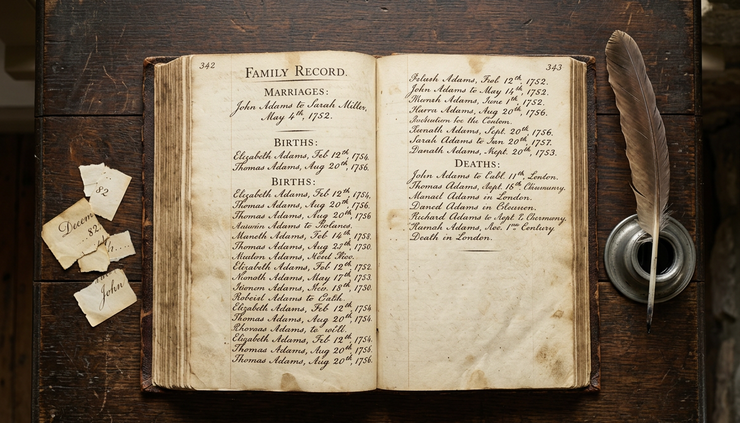
The Revolutionary War can feel distant because its language feels formal. Commissions, resolves, proclamations, campaigns, and treaties can turn real suffering into tidy paragraphs.
A damaged object breaks that distance.
A torn Bible asks different questions than a battle map does. Who owned it? Who carried it? Who decided to tear the page? Was there hesitation? Was there no time to hesitate? Did anyone notice the words on the scrap before it went down the barrel?
No record may answer those questions. Still, the questions matter because they restore the human scale of the war.
That scale is often missing when history becomes too focused on famous names. George Washington, Thomas Jefferson, John Adams, Benjamin Franklin, and other major figures deserve study. Yet the war was also lived by people whose names barely survived, or did not survive at all.
The paper in a musket might have come from a nameless printer, bought by a farmer, read by a child, preserved by a parent, carried by a soldier, and destroyed in an instant. That chain of use is humble, but it is history.
It also reminds us that objects do not have one fixed meaning. A Bible can be sacred text, family archive, printed product, travel companion, emergency paper supply, and museum artifact. The meaning changes as circumstances change.
War forces those changes brutally.
That is the sorrow in the Gun Wad Bible. The book did not stop being meaningful when its pages were torn out. If anything, the damage made its meaning more visible. The missing pages became evidence of pressure, fear, and need.
The Gun Wad Bible is not the largest story from the American Revolution. It is not the cleanest. It does not end with a ringing speech or a triumphant march.
That is why it matters.
It reminds us that war reaches into pockets, shelves, kitchens, churches, barns, and bedsides. It consumes the things people carry for comfort. It turns paper into ammunition and memory into debris.
The Revolution produced a new nation, but it also produced grief. Both truths belong in the same history.
When we pay attention to small, strange artifacts, we learn to see the past with more care. A torn page can tell us about faith, scarcity, violence, and survival all at once. It can also make us pause before turning war into legend.
The strange story of the Gun Wad Bible leaves a simple lesson: history is not only found in declarations and battlefields. Sometimes it rests in a damaged book, where the missing pages say almost as much as the words that remain.


The "Informed Citizen" is a Judeo-Christian conservative blog and website dedicated to providing information on our Constitution and the country's governance, enabling you, the voter, to make informed decisions at the ballot box.
If you are interested in participating in Zoom classes to learn about our Constitution, what the Constitution actually states, the meaning behind the Articles, the history behind its creation, along with informational conversations, please visit americaninsanity.org and subscribe to “The Informed Citizen.”
Together, our voices as Judeo-Christian conservatives will resonate more powerfully than ever.
Please share this post with your contacts. Everyone needs to be an informed citizen so they, too, can better understand our Constitution, what our elected officials are doing to support or abuse it, and thereby make informed decisions at the ballot box.
Neither the “Informed Citizen” Blog nor I, the editor and owner of this blog, am in any way affiliated with or speak on behalf of any political party or individual. What is posted are researched facts or, when appropriate, identified as being "My Opinion."


Comments